Cardiology
Is your dog coughing, gagging without any obvious reason, or getting tired easily? These symptoms are among the visible signs of heart disease. The number of cardiology patients is constantly increasing, and not just among humans, which is why it is crucial to have your pet examined in time.Diagnosis of Heart Disease
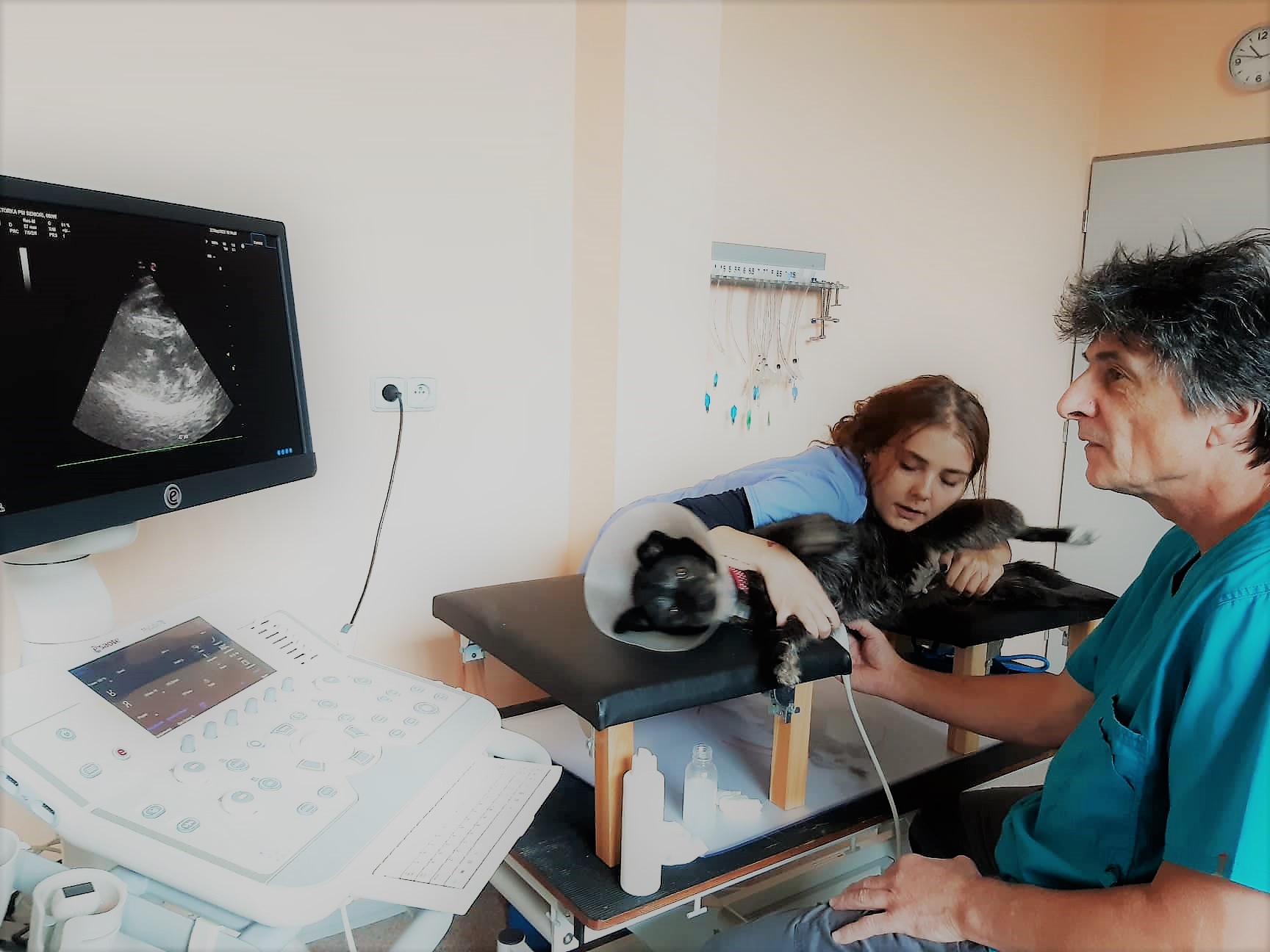
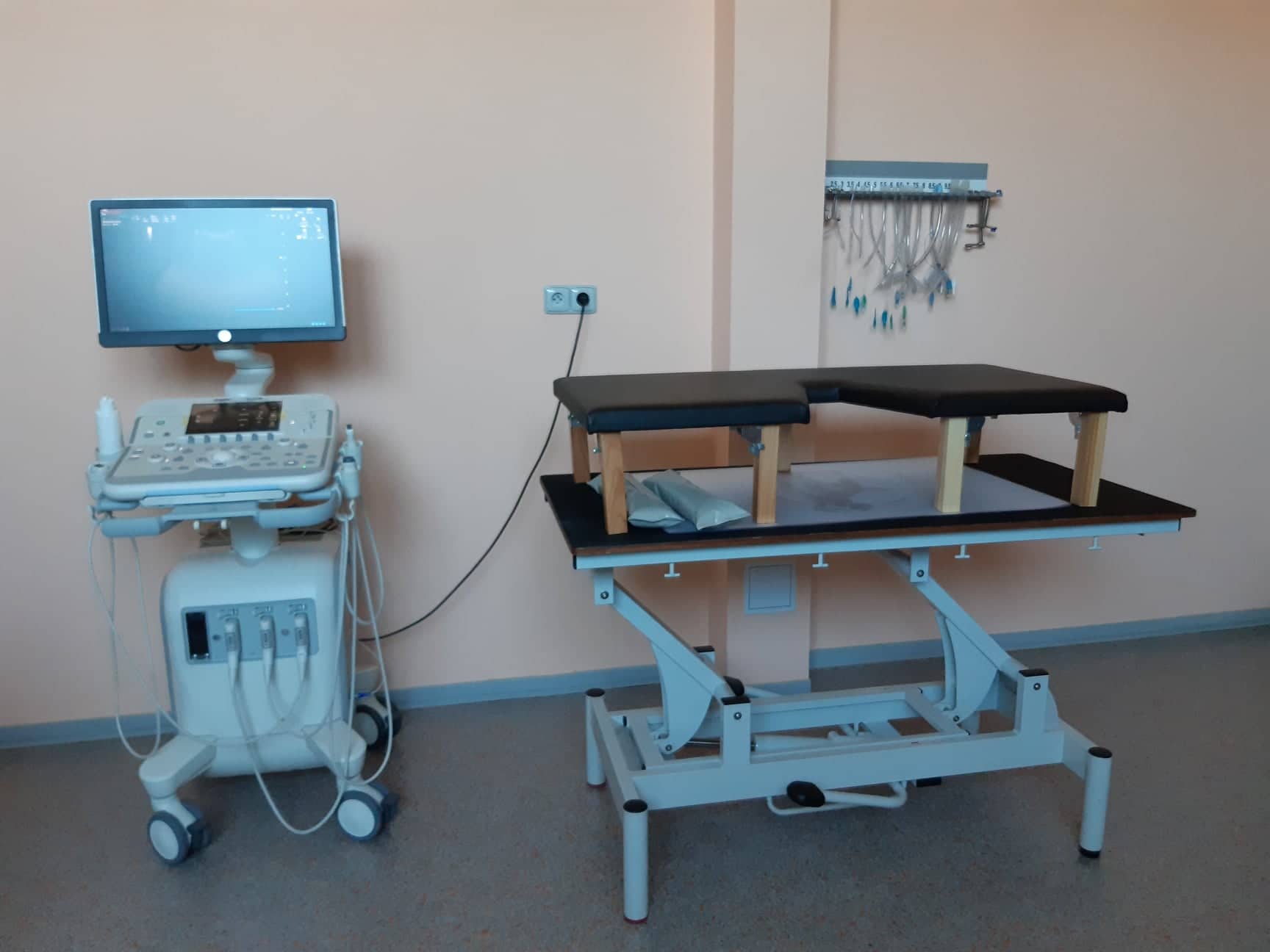
The foundation, of course, is a clinical examination. However, to actually see the heart itself, we perform an ultrasonographic examination of the heart. Echocardiography allows us, using specialized examination probes, to assess the shape and size of the heart and visualize its individual parts (atria, ventricles, valves, pericardium), which we can then measure in detail. We also obtain details about the blood flow through the heart. This examination is completely painless and non-invasive, meaning the patient can usually undergo it without sedation. If necessary, we also perform a chest X-ray or an ECG. Based on the diagnosis, we choose an individual therapy for each patient, along with regular check-ups of their health status.My pet has a heart condition. What happens next?
Heart disease cannot be completely cured, but appropriate and targeted treatment can ensure a significantly better quality of life and a longer lifespan for your pet. We will advise you on how to optimize their daily routine, adapt their physical activity, and adjust their nutrition so that your four-legged friend can stay active and enjoy every minute with you.What causes heart disease?
Some dog breeds, such as the Doberman, can have a congenital heart defect, and sometimes its only symptom is sudden death. However, a frequent cause of heart disease is neglected teeth scaling (removal of tartar). An infection from the oral cavity damages the liver and kidneys, and causes deformations on the heart valves, leading to the gradual development of heart problems.Do cats also have cardiological issues?
Yes, they do, but diagnosing them is much more difficult than in dogs. The manifestations of a diseased heart are usually not as prominent in cats – they can include labored breathing, loss of appetite, or weight loss.Discounted Prevention for Senior Pets
Heart disease can initially progress covertly, which is why we recommend regular check-ups for otherwise healthy senior pets. The Senior Program for our patients saves you both planning worries and money. More information here.